Designing a neo-bank debit card and NFT marketplace inside the wallet
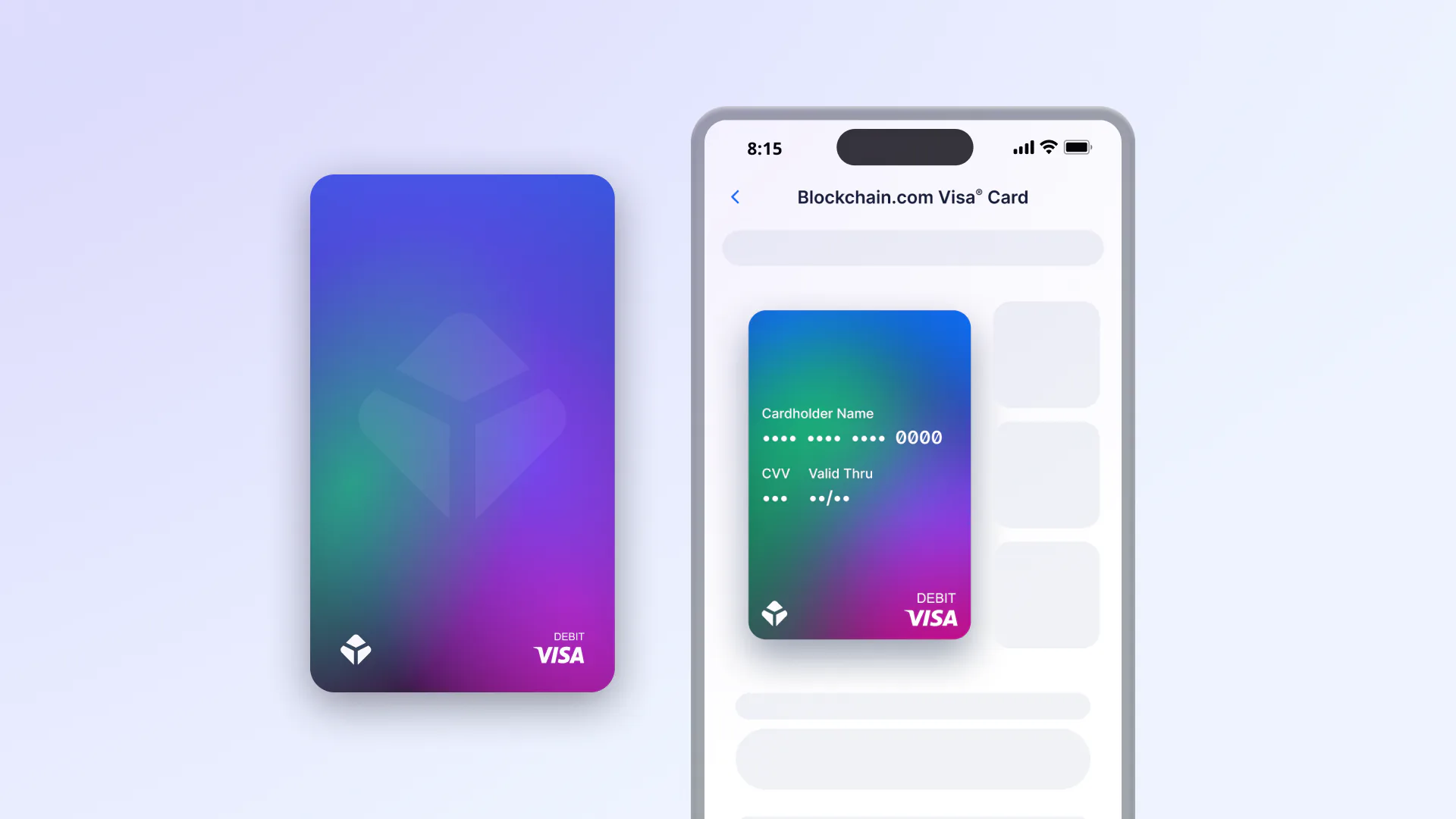
In 2022 Blockchain.com set out to add new products to its existing wallet: a Visa card for spending crypto, and an NFT marketplace. I designed both experiences alongside Visa.
- Company
- Blockchain.com
- Role
- Senior product designer
- When
- 2022
- Scope
- Card, NFT marketplace, research, component library
In short
- Two products in one year, both inside the wallet people already had.
- Both needed to work within constraints of the existing app and external partners (Visa and Opensea).
- The card was shelved before launch. The marketplace ran six months, then scaled back to view-only.
- Crypto back on every purchase
- 0.5%
- Number of products built
- 2
Overview
Two products, one wallet
The card would let people spend crypto anywhere and earn some back. The NFT side would let them browse and buy without leaving the wallet.
Both went into a product built around balances, so each time we had to work out how far that could stretch.
Card
What we set out to build
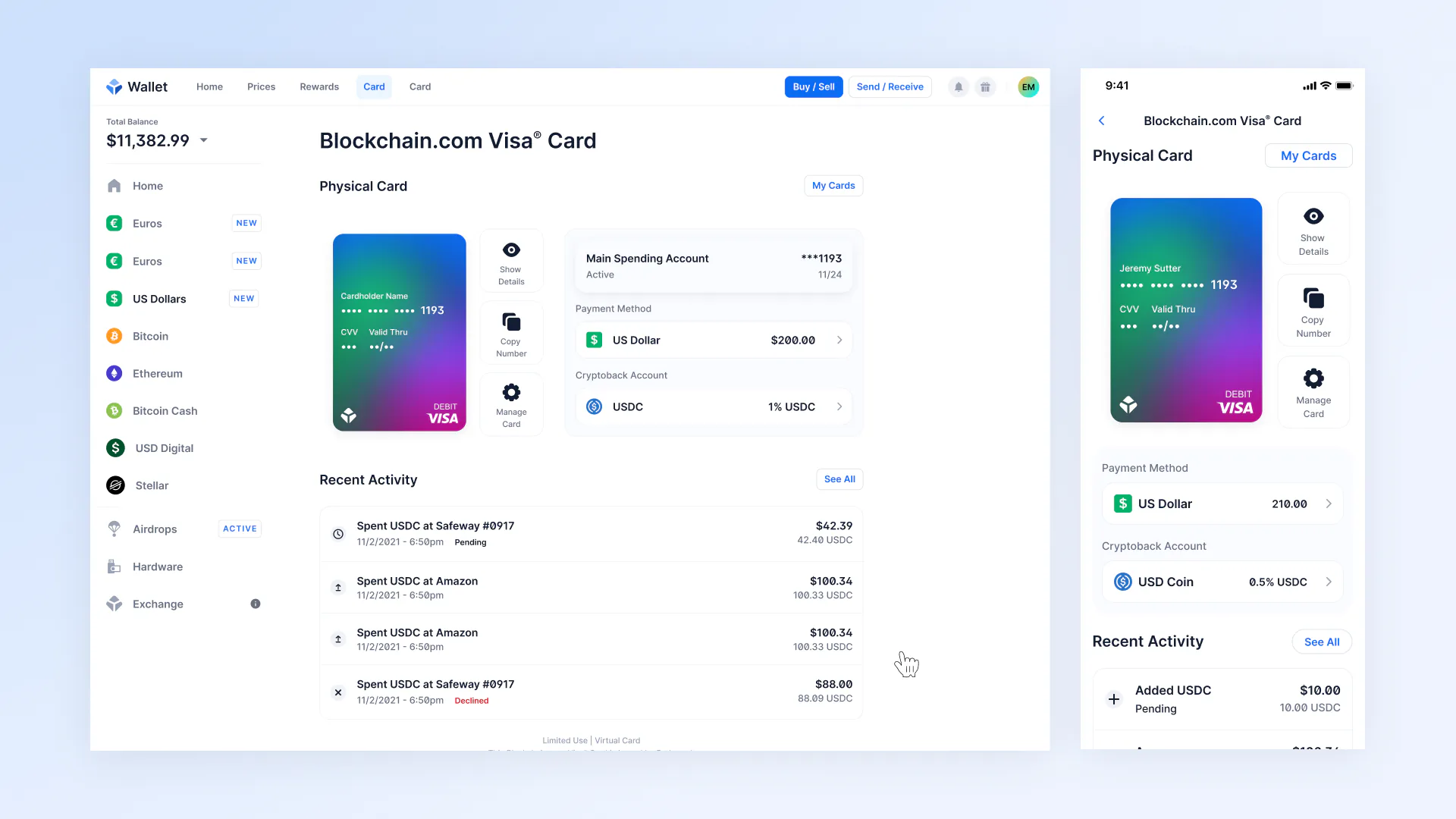
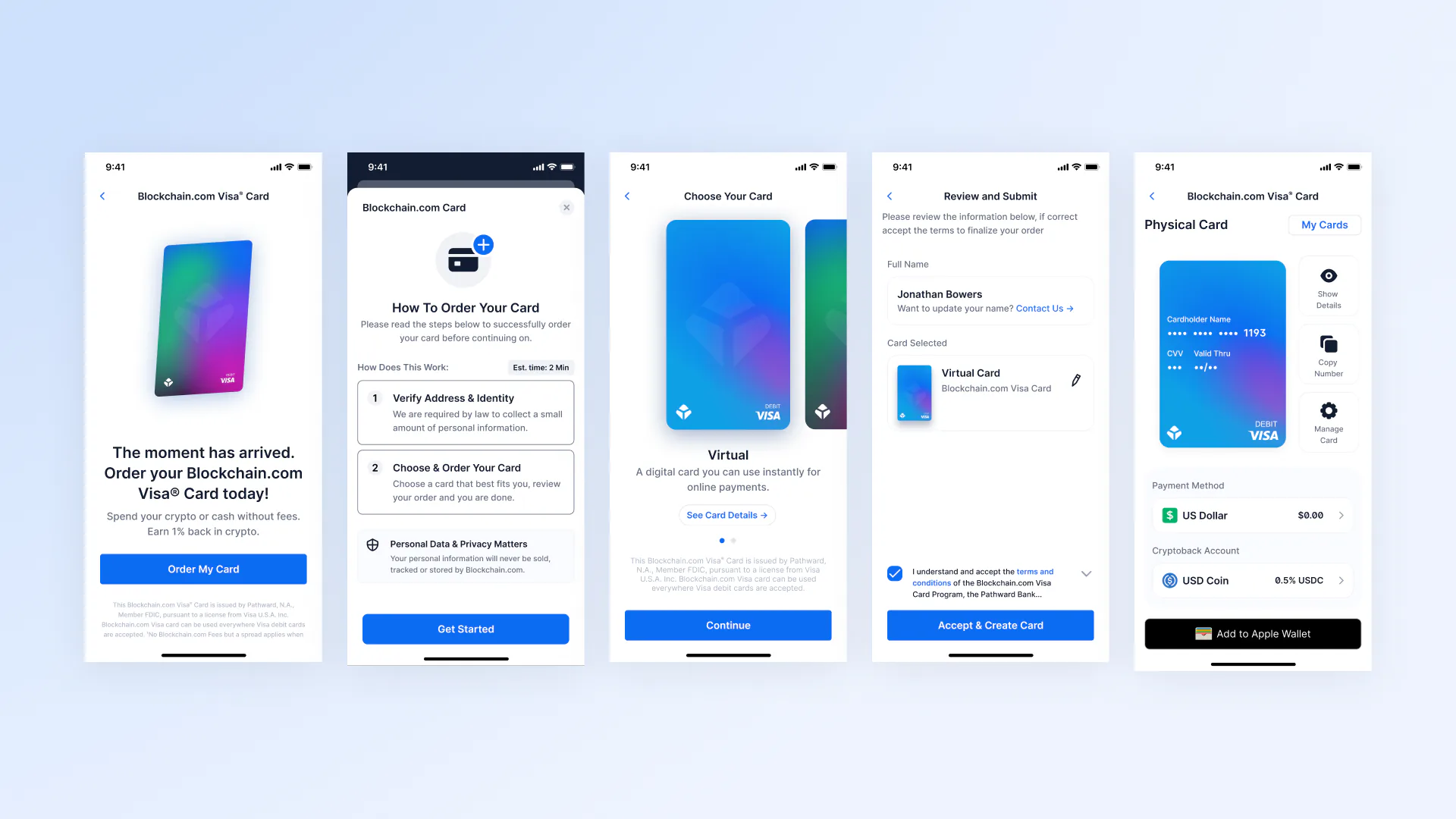
The card MVP had to essentially stand up an entire banking layer in the wallet, cover the card controls expected at launch, and get a physical card issued in the US with Visa.
We kicked off with research around Coinbase, Nexo and Revolut showing us how ordering, funding, controls and card states normally work. From there we began crafting our own card ordering and management experiences.

Settlement
Transaction states
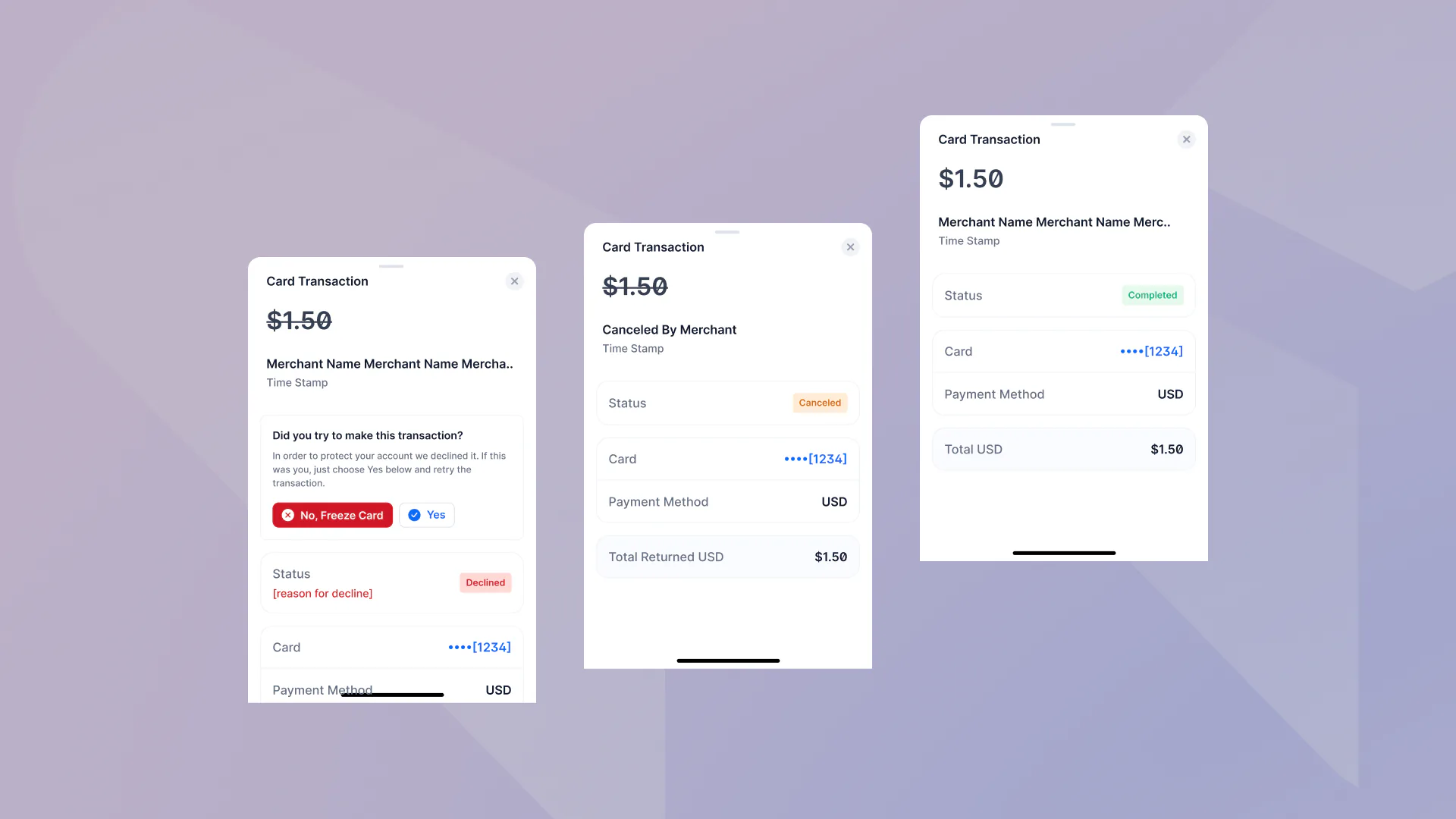
A purchase takes several steps to settle. We mapped each one, then designed its screen.
Those states had to read the same in card activity and in a wallet that only knew on-chain transfers.
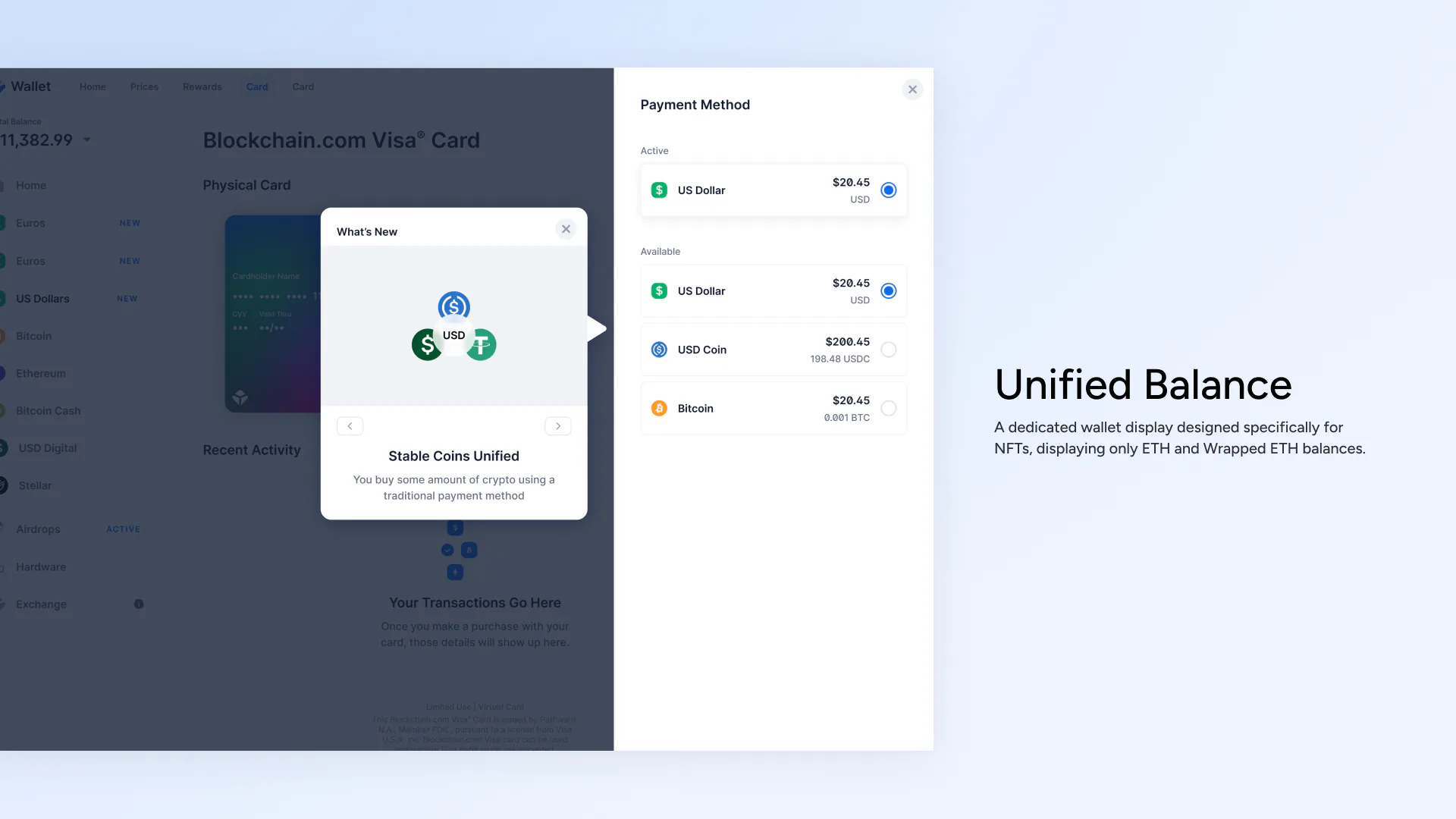
Cryptoback
Managing cryptoback
Cryptoback means giving 0.5% of every purchase, in whichever asset the cardholder picks back as a card perk.
Lifetime earnings sit at the top, split by asset. Customers can switch what they earn in at anytime and can see an overview at the top.
NFTs
Bringing NFTs into the wallet
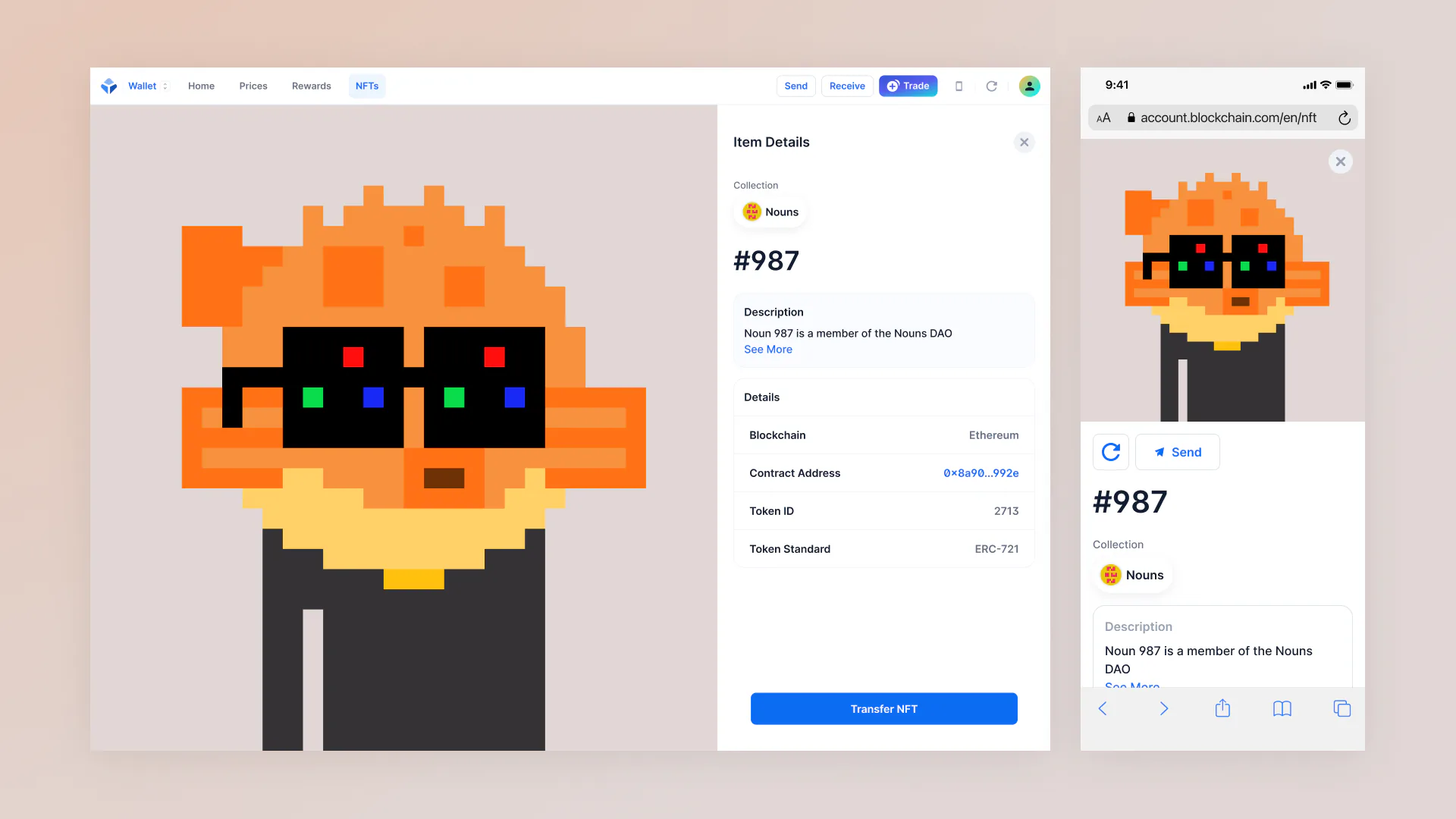
NFTs peaked in early 2022 and the company wanted browsing, buying and transfers inside the wallet.
I had pivoted from the debit card in parallel, so to orient myself we went through OpenSea and Rarible to learn what people would expect. This gave us product direction as we built our marketplace in the app.
Marketplace
What we built
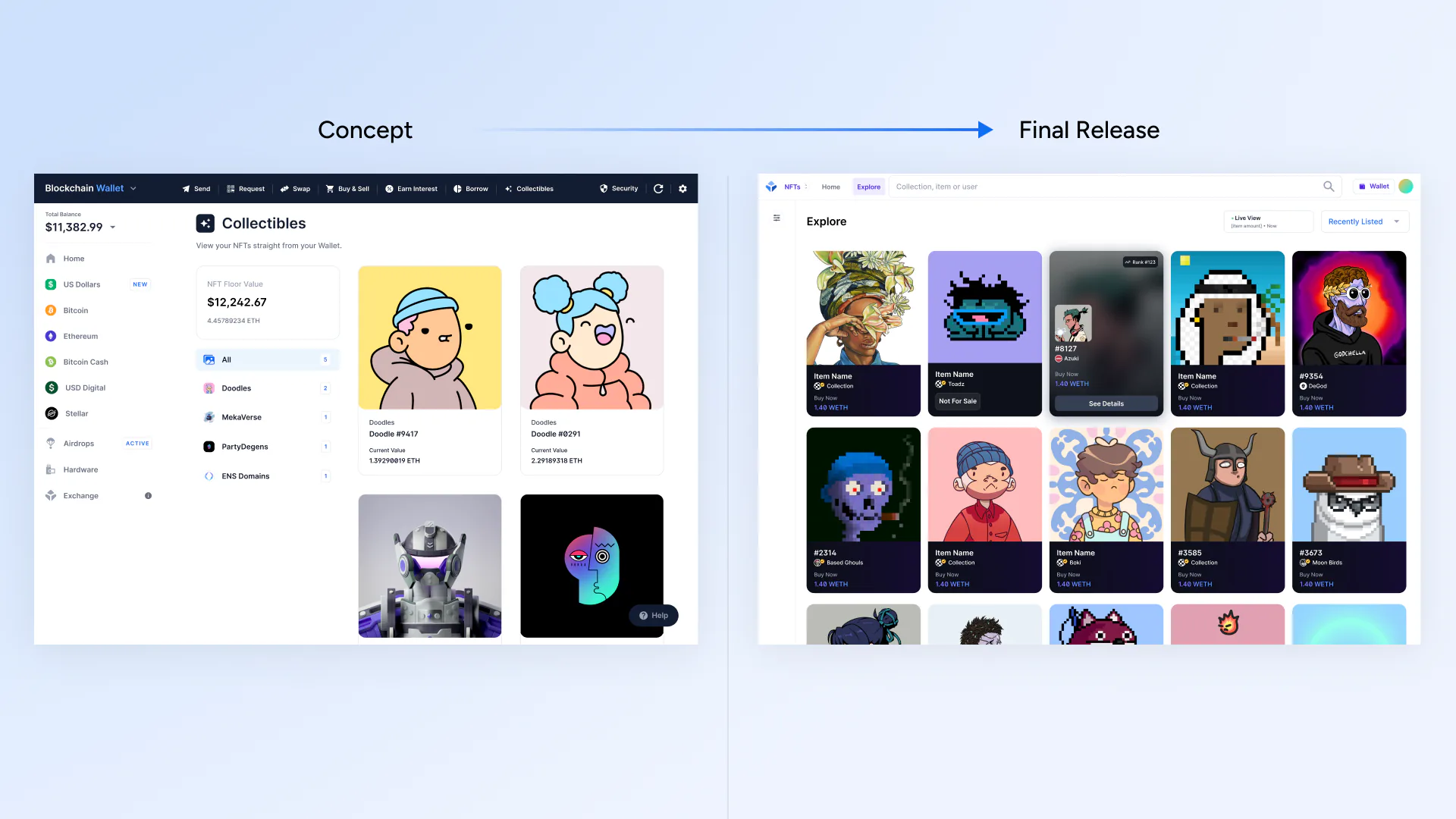
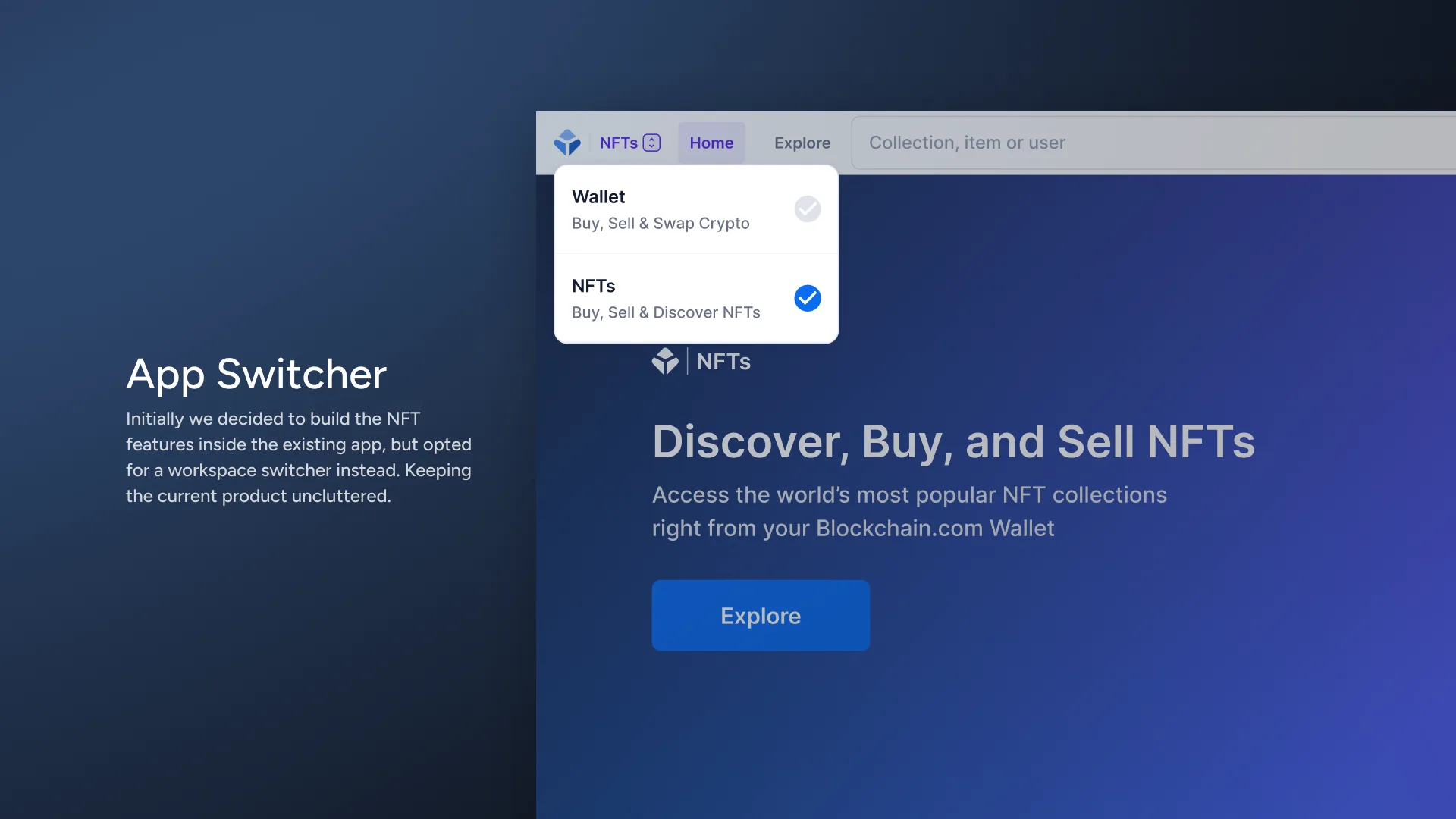
We added a workspace switcher to keep the main application and the NFT marketplace independent.
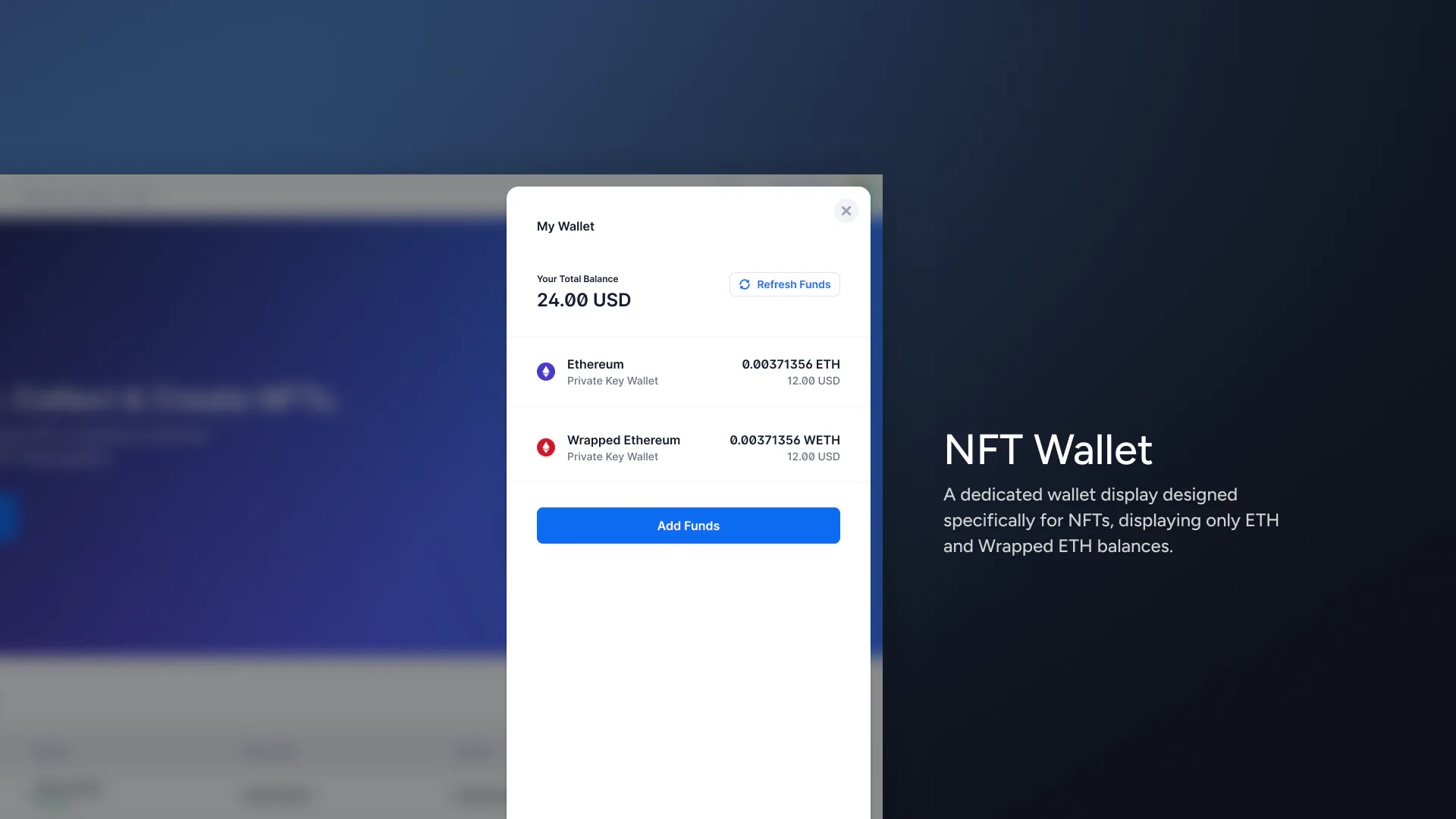
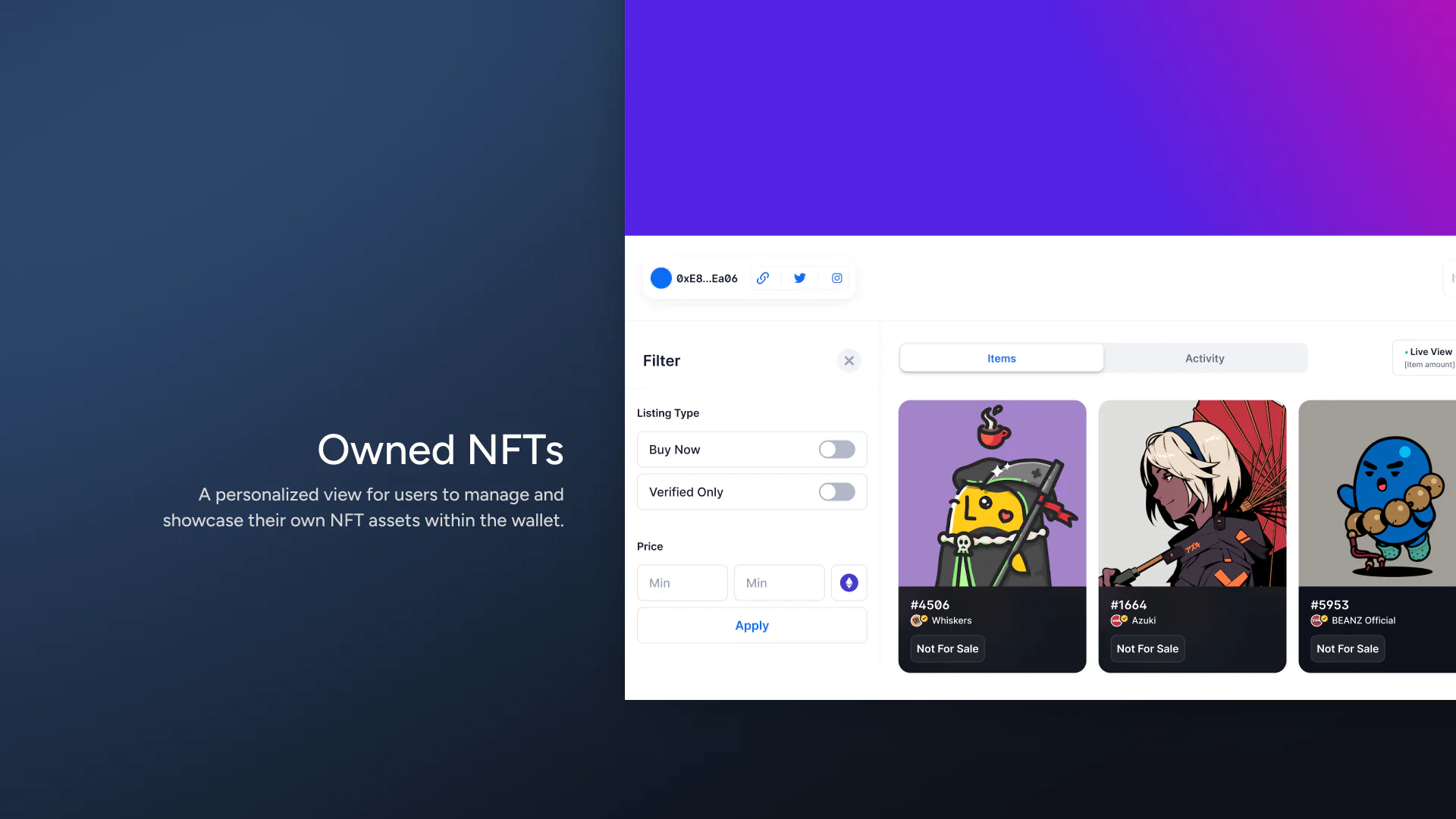
Within the marketplace we built an explore page, profiles for owned NFTs and a dedicated sub-wallet for transacting.
Outcome
Where they both landed
The card was shelved before launch. Market conditions ended the marketplace six months in, and we scaled back to a view-only model inside the wallet.
Being modular is what made the pivot quick: bidding lived on the item screen and could simply stop rendering. Where we hit technical limits we asked OpenSea's engineers rather than designing around them.
Adapting to shifting business needs is part of the job, even when it means shelving something that far along. When all was said and done, I still think open, de-banked tools are an inevitable future.